LARKIN'S HERE
BEYOND THE CITY CENTRE
This section of the journey visits places that were at the heart of Larkin”s life in Hull. From the “lucent comb” of Hull Royal Infirmary, where he stayed as an inpatient, the trail guides you on up to the old General Cemetery of which he was so fond, then to Pearson Park, where Larkin lived in an attic flat for 18 years. Entering the long, leafy boulevards of “The Avenues,” the trail pauses for reflection at the place where he went “to the inevitable” and died.
The journey continues along the busy thoroughfare where Larkin liked to shop, past the large house and garden he reluctantly bought, and guides you across to the University of Hull, where Larkin worked in its “lifted study-storehouse” as the University Librarian for 30 years. The trail then takes a suburban direction and visitors can drive, cycle or take a bus to Cottingham, the large village where Philip Larkin is buried.
Hull Royal Infirmary
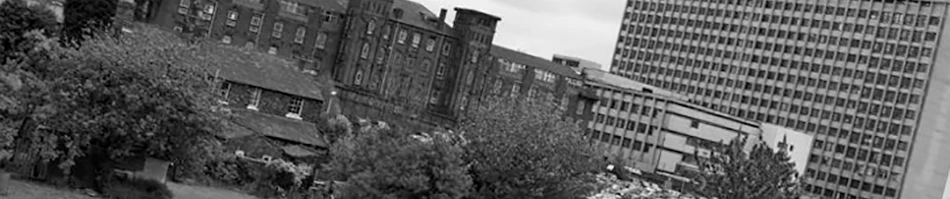
This 14-storey hospital, ‘higher than the handsomest hotel’, was built in 1967 and is the site of one of Larkin’s longer poems, ‘The Building’. From the top floor of the University’s Brynmor Jones Library, it was – and still is – possible to see the Infirmary, since, as Larkin noted, ‘The lucent comb shows up for miles’.
‘The Building’ was written five years after the hospital’s construction, long before Larkin became so well-acquainted with its wards and corridors. He was an inpatient on several occasions and spent some time here shortly before his death in 1985.
Since then, Hull Royal Infirmary has constructed several new buildings on its expanding site and the tower block with which Larkin was so familiar no longer stands in isolation.
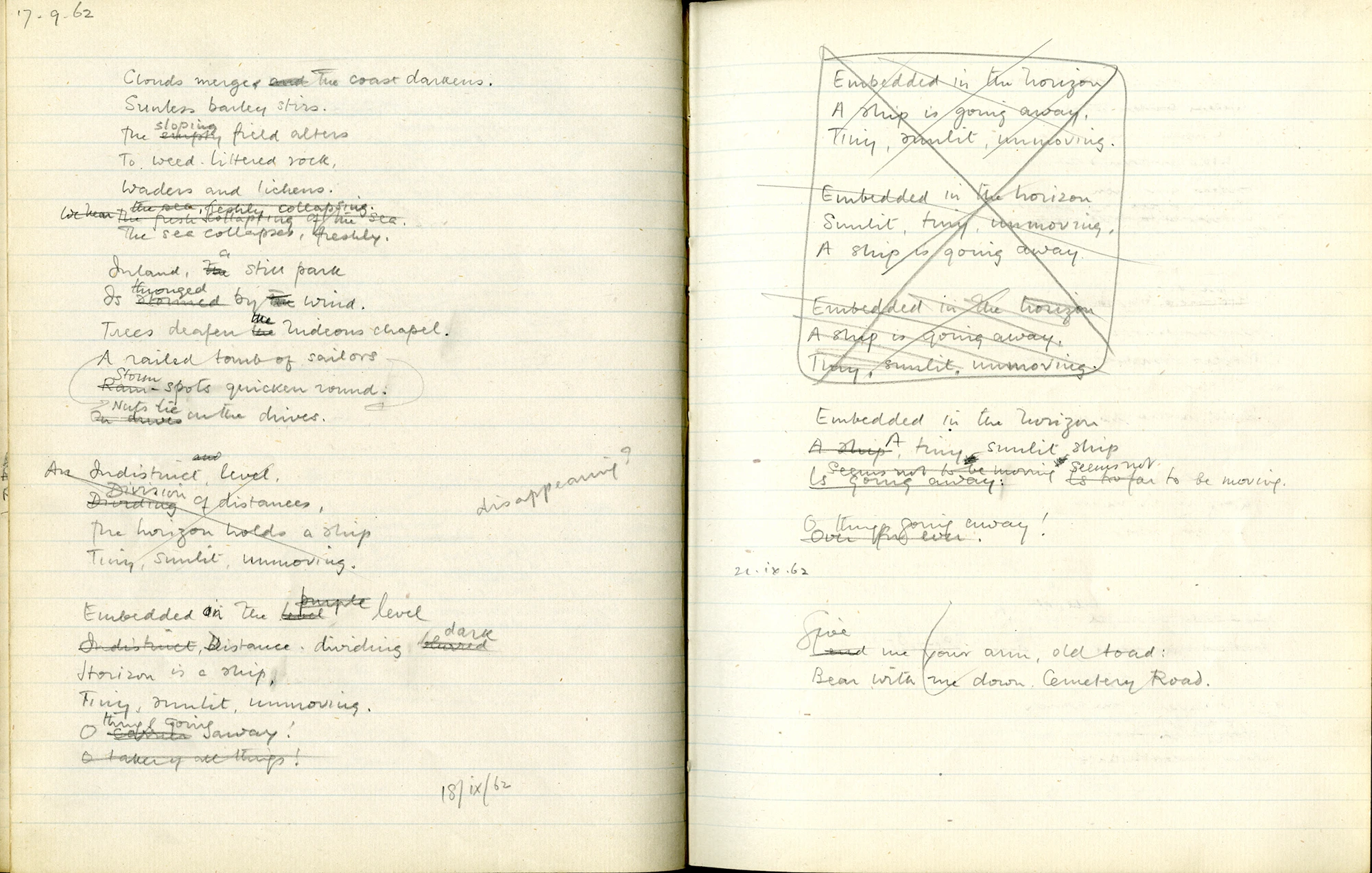
Original manuscript of How.
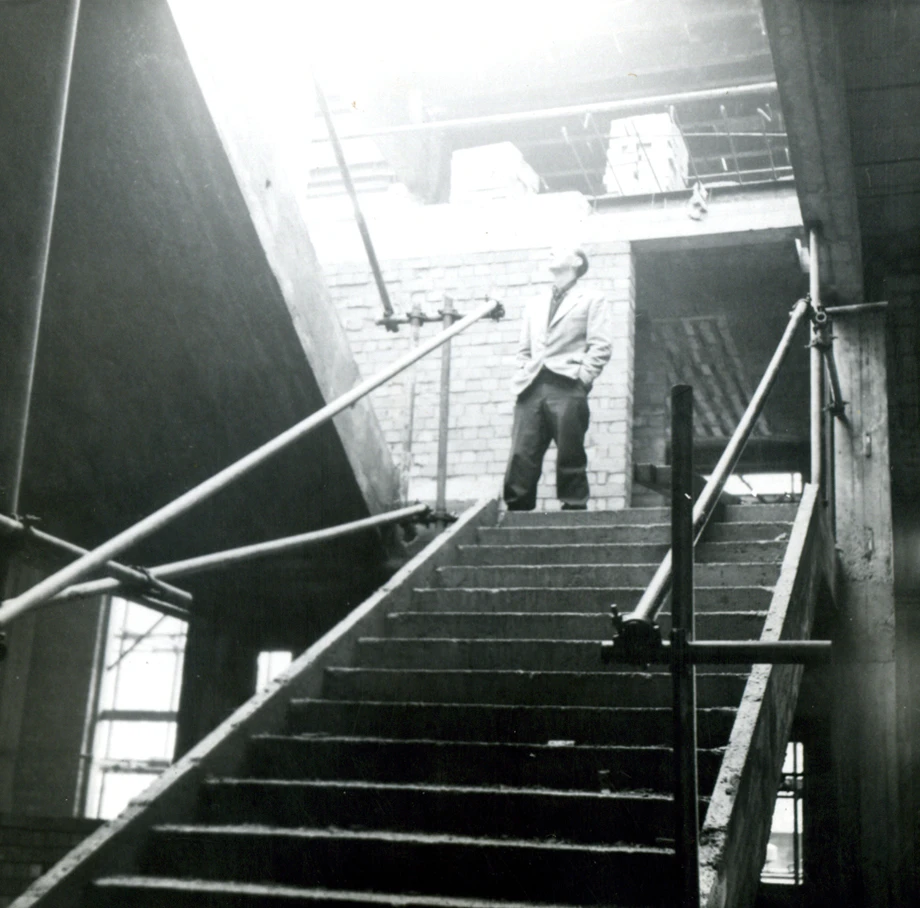
The Building as Larkin would have known it.
Location
Hull Royal Infirmary
Anlaby Road,
Hull HU3 2JZ
The sign can be found on the boundary wall of the hospital by the pedestrian crossing on Argyle Street.
The General Cemetery
Spring Bank West
The General Cemetery
Spring Bank West
‘… a natural cathedral, an inimitable blended growth of nature and humanity over a century; something that no other town could create whatever its resources’.
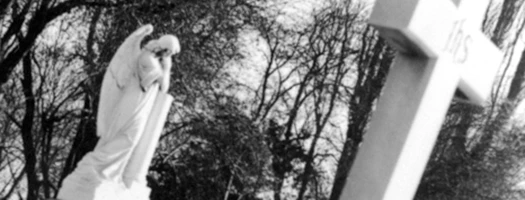
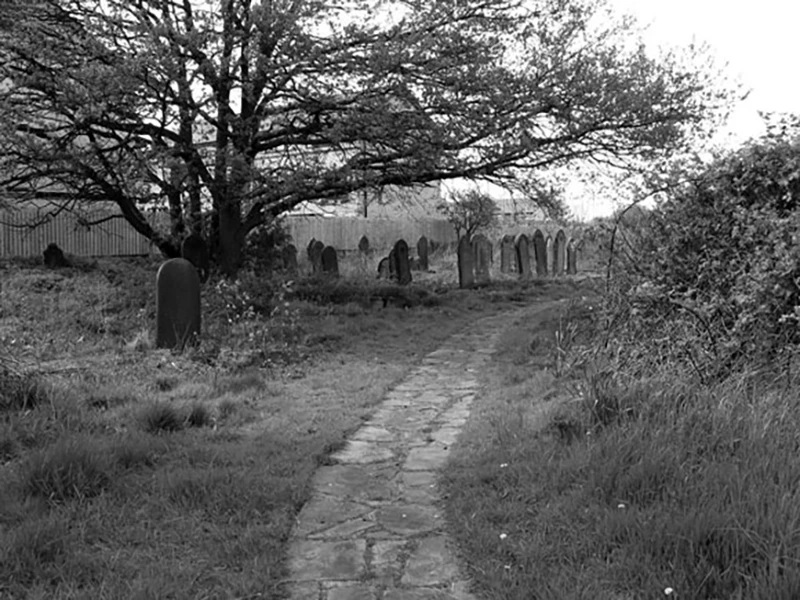
The former General Cemetery of Hull, established in 1847, begins almost as soon as you turn left at Spring Bank corner. By the 1960s it was very neglected and overgrown. Its wildness appealed to Larkin, who described it to Betjeman as ‘the most beautiful spot in Hull’. When it was threatened with closure, Larkin joined others who complained and he leaped to its defence, believing it to be:
‘… a natural cathedral, an inimitable blended growth of nature and humanity over a century; something that no other town could create whatever its resources’.
When the Hartleys asked Larkin where he would like to be photographed for the sleeve of their record album of him reading The Less Deceived, this was the place he chose.
Despite Larkin’s impassioned plea, the Council partially cleared the cemetery in the 1970s and today this is a popular place for local residents to walk their dogs. Larkin also walked regularly in the St Helena Gardens graveyards down Sculcoates lane, where he went to gather inspiration for his work, and which features in the 1964 BBC Monitor documentary.
Larkin chose the cemetery at Spring Bank West as the site where he would like to be photographed for the sleeve of the LP recording of his collection The Less Deceived.
Larkin was a keen photographer and the cemetery at Spring Bank features regularly in his collection of images.
The St Helena Gardens graveyards down Sculcoates lane.
Location
The General Cemetery
Spring Bank West,
Hull HU5 3TG
The sign can be found on the Spring Bank West Gateway to the General Cemetery.
Pearson Park
Pearson Park
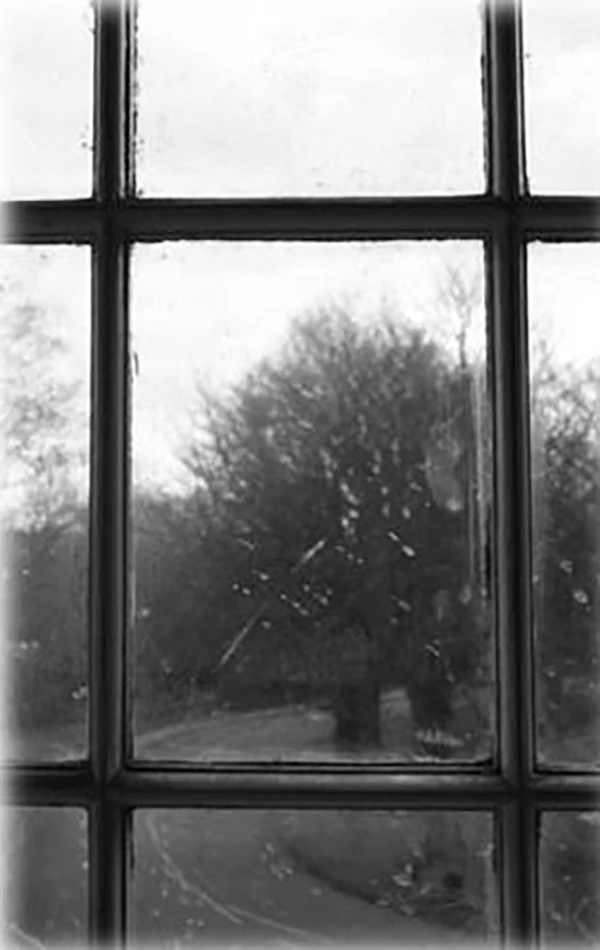
Rather than words comes the thought of high windows: / The sun-comprehending glass / And beyond it, the deep blue air, that shows / Nothing, and is nowhere, and is endless
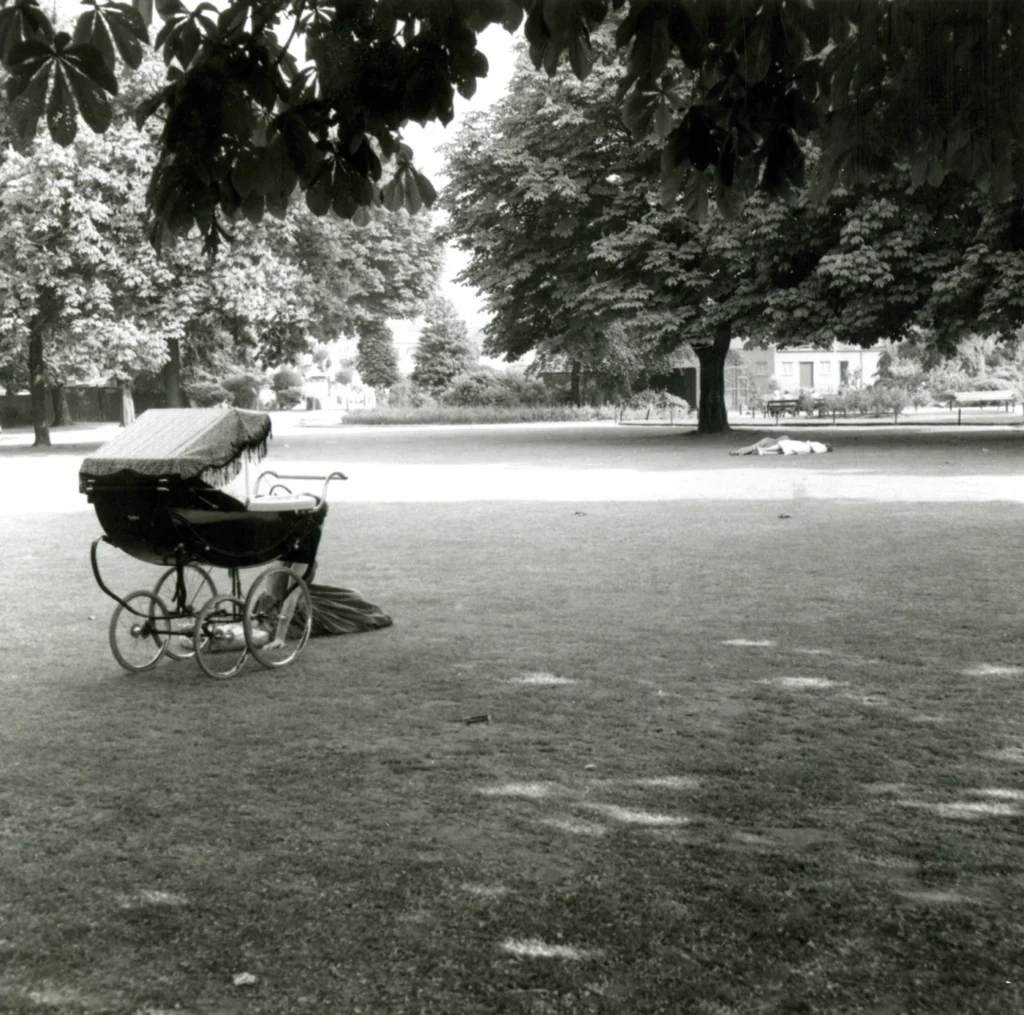
Photograph by Larkin, showing Pearson Park, overlooked by his attic flat.
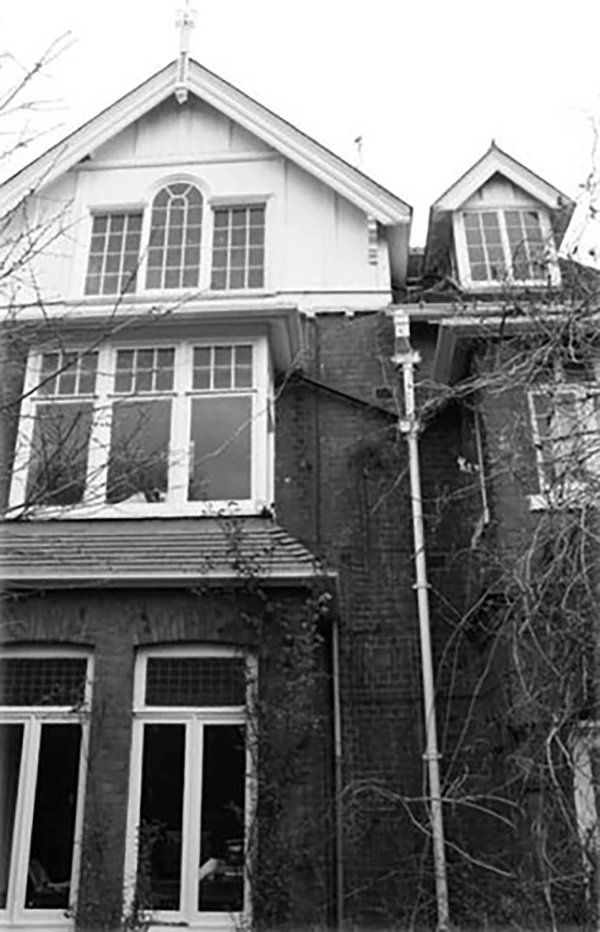
It was to this park that Larkin moved in 1956. Following a succession of short staysin Cottingham during his first year as University Librarian, he eventually movedinto an attic flat at no.32 … and here he lived for the next 18 years.
Number 32, then owned by the University, was divided into three storeys of flats, intended as temporary accommodation for staff who were new to the city, until such time as they had settled in, grown familiar with the area and become owner-occupiers elsewhere. Larkin, however, at ease behind the ‘sun-comprehending glass’, felt no such pull, explaining in his later years: ‘It was the top flat of a house that was reputedly the American Consulate during the war, and though it might
not have suited everybody, it suited me’.
The park itself was the first free park in the city and opened in 1860 on land donated by the Mayor, Zachariah Charles Pearson. Like the rest of The Avenues area, these substantial houses were designed with affluent families in mind and
soon became very fashionable.
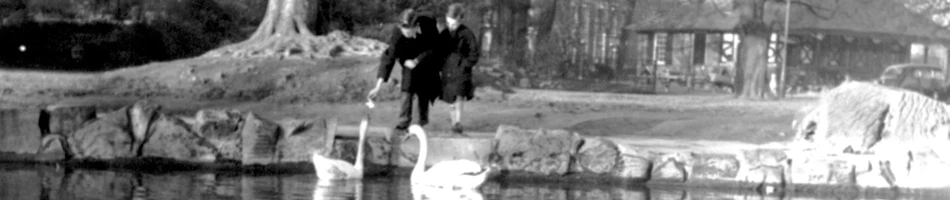
Most of these houses survive today, although they are mainly flats or residential homes. Pearson Park itself, however, is much the same and continues to draw people of all ages, who come to enjoy its lake, the humid Victorian conservatory, its floral displays, statues, the ever-popular playground and the wide expanses of grass for sun-bathing and playing ball-games. Some simply enjoy sitting a while on one of the park’s many benches, including the blue metal one dedicated to Larkin, tucked away near the conservatory.
Writing to his mother two years after he had moved into no.32, Larkin said: ‘Pearson Park exercises a fascination over me and I always enjoy an hour in it’. Much of the footage for the BBC’s Monitor programme, in which John Betjeman interviewed Larkin, was filmed in the ‘temporary’ flat.
As Jean Hartley recalls: ‘He said that he had always lived at the top of buildings and that it pleased him to do so. It was the perfect place for a man of his temperament, one who loved to look out at the world but who wanted complete control over who could look back at him. His green-fringed eyrie provided the ideal ambience for writing and was obviously the starting point for poems such as ‘Toads Revisited’, ‘The Trees’, ‘High Windows’, ‘Sad Steps’, ‘Broadcast’ and ‘Vers de Société’. The poems that comprise The Whitsun Weddings and High Windows volumes were written here, as were many poems that would have been included in a last collection had there been one’.
When the University decided to sell the entire house in 1974, Larkin was obliged to
find somewhere else to live and reluctantly became an owner-occupier in Newland
Park (Trail number 17).
(From Further Requirements – interview with John Haffenden)
“The University has decided to sell its ‘worst properties’, which naturally includes the house I live in”
Pearson Park images by Larkin.
Images by Joe Johnson, including a rare view from the attic windows, from which Larkin looked out.
Toads Revisited and Trees were amongst many of the poems Larkin wrote whilst living at Pearson Park. His collection, High Windows, includes many poems that were clearly in part inspired by the view from Larkin’s lodgings overlooking the park.
Location
Pearson Park, Hull HU5 2TQ
The sign can be found on the conservatory outbuilding near to the memorial bench.
Nuffield Hospital
Nuffield Hospital
To Andrew Motion – 19 October 1985
“I have an uneasy suspicion that the curtain is about to go up on Act II of the Larkin drama – not well, tiresome symptoms, call in the quacks. So brush up your shovel and headstone: duties of executors.”
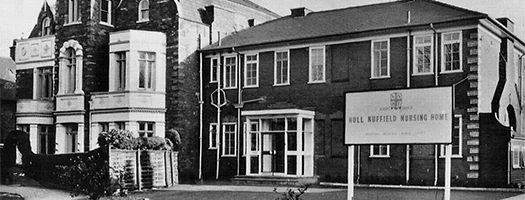
Mid-way along Westbourne Avenue you will find one of the area’s two remaining fountains. To your left, quietly set back in the curve of the Avenue is the former Nuffield Hospital. During his final illness, Philip Larkin stayed here several times as an inpatient. He had felt at ease in these Avenues for many years and had often enjoyed the change of scene they gave him whilst living just a few minutes away in Pearson Park.
Jean Hartley recalls: ‘Though he was very ill, visiting friends found him smartly dressed and as entertaining as ever in a room overlooking the back garden. Comic hypochondria and intimations of mortality had been regular motifs in his conversation from young manhood onwards, so lugubrious warnings such as, ‘You’ll probably be the last people to see me alive’, had less effect on his visitors than they warranted’.
That last person was the nurse, who held his hand as he died, in the early hours of 2 December 1985, and to whom he said his final words, reputedly: ‘I am going to the inevitable’.
Philip Larkin was buried in the Municipal Cemetery in Cottingham (Trail number 19).
Nuffield Hospital as it would have been in Larkins time.
Location
Nuffield Hospital
81 Westbourne Avenue
Hull HU5 3H
The sign can be found at the front of the site by the staff entrance.
Newland Avenue
Sharp Street
Newland Avenue
Sharp Street
Newland Avenue is the busiest shopping thoroughfare in the area. Here, residents who have been in the city for years live alongside their temporary neighbours – students from Hull University – and the Avenue is a constant flow of locals, University staff, students and people simply looking for somewhere to enjoy a coffee and watch the world go by.
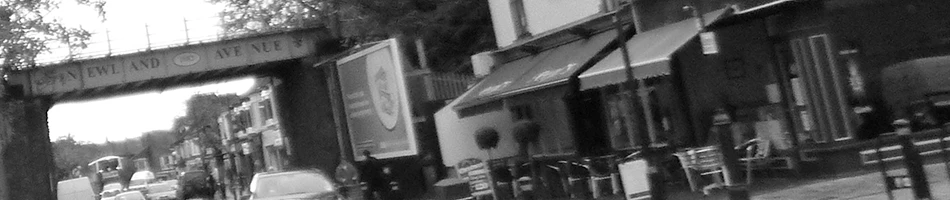
As you walk up Newland Avenue, you will pass under one of Hull’s remaining railway bridges, proudly bearing the Avenue’s name, and then Larkin’s Bar immediately to your right.
The war memorial at the bottom of Sharp Street (a little way along on your left) finds resonance in Larkin’s poem ‘MCMXIV’, where he talks of ‘the shut shops, the bleached/ Established names on the sunblinds’.
To the right, set back a little from the road, is the Piper Club, which in Larkin’s time was a small cinema, aptly named ‘Monica’.
As with the city centre, many of the shops you will pass on Newland Avenue have changed hands – some several times – since the 1960s and 70s. Perhaps the most notable change is the gradual appearance of café bars, coffee shops and small supermarkets in place of some of the more traditional shops that Larkin often visited.
When he bought his first car, Larkin complained that Newland Avenue was hazardous for motorists. Drive along here on any weekday, especially Fridays, and many would say that little had changed, although the parking is much easier than it was then.
At the top end of Newland Avenue, opposite the Methodist chapel with its large dome, stands the site of the former Newland Homes.
At this point, it is possible to turn right for a brief detour to see two further pubs that Larkin knew well: The Gardeners Arms a little way along to your right and The Haworth Arms at the junction with Beverley Road. Larkin regularly stopped off at one of these pubs on his way home from work.
To Barbara Pym – 20 February 1964 (MCMXIV)
“I’m rather fond of MCMXIV-It’s a trickpoem, all in one sentence & no main verb”
Image by Larkin – Monica Cinema
Location
Newland Avenue
Hull
HU5 2AQ
The sign can be found at the junction of Sharp Street and Newland Avenue.
105 Newland Park
105 Newland Park
To Judy Egerton – 17 February 1974 “I have blindly, deafly and dumbly, said I will buy an utterly undistinguished little modern house in Newland Park” Turning left at the top of Newland Avenue you shortly reach Newland Park. It was to here that Larkin moved in 1974 when obliged to leave his attic flat. Although this long curving road, with its substantial houses, mature trees and relative seclusion shared some characteristics with The Avenues area, Larkin found it hard to take on the responsibilities of owning no.105. He described it to a friend as ‘the ugliest one-roomed house in Hull’ and, struggled with the burden of having to keep its mature enclosed garden tidy. Reflecting on the fateful day when ‘The mower stalled, twice’, his distress over having accidentally killed the hedgehog he had seen before ‘and even fed’ led him to conclude that ‘..we should be careful/ Of each other, we should be kind/ While there is still time.’
Larkin continued to live in Newland Park until he died. In 1983, two years before his death, Larkin’s close friend, Monica Jones, joined him at no.105 and stayed on in the house until her own death in 2001. The lengthy house clearance uncovered hundreds of letters from Larkin to Monica.
In the years following Larkin’s death, the façade of the house has gradually changed. Among other structural improvements, a bay window has been placed where Larkin’s garage door once was. The current owner adores the garden, including all the upkeep that goes with it, saying she ‘bought a garden with a house attached’.
To Judy Egerton-10 June 1979 (The Mower)
“This has been a rather depressing day: killed a hedgehog when mowing the lawn, by accident of course. It’s upset me rather”
Location
105 Newland Park
Hull
HU5 2DT
The sign can be found at the second entrance to Newland Park traveling out of town.
University of Hull
University of Hull
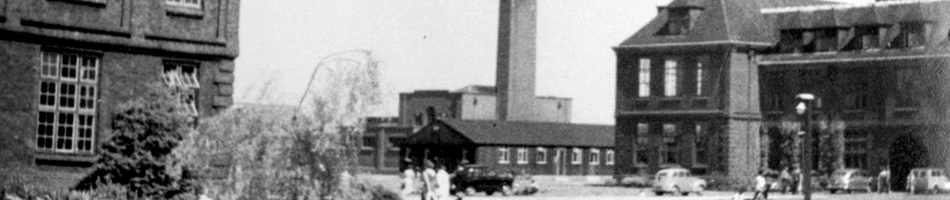
A little further along from Newland Park (or coming back on yourself, if you have walked its full horse-shoe length), it is easy to see the University of Hull. Rising seven storeys from the midst of its elder neighbours is the Brynmor Jones Library, the ‘lifted study storehouse’ that was to be Larkin’s place of work for 30 years.
Membership and use of the Library is limited to staff, students and graduates of the University, and to others with specific needs. However, visitors are always welcome to look around – simply ask at the reception desk on arrival. Visits to the Librarian’s office are available to individuals and small groups by prior appointment and with the permission of the Librarian.
The University itself began life in 1927, when it was founded as the University College. It achieved full university status in the year before Larkin’s arrival.
For many years, the majority of the university buildings were referred to simply as ‘Blocks’ and the names you see today – Cohen, Venn et al. – are comparatively recent.
Not only was the Brynmor Jones Library his place of work, but Larkin was also largely – and modestly – instrumental in its creation. Almost a quarter of a century after he took up the post of University Librarian, Larkin told The Observer: ‘Librarianship suits me … and it has just the right blend of academic interest and administration that seems to suit my particular talents, such as they are’.
Although he denounced ‘the toad work’ that ‘soils with its sickening poison’, librarianship did indeed suit Larkin. Most of his lunchtimes were spent in what was formerly The Refectory (latterly Staff House), where he would talk over drinks with friends and colleagues.
Heading back from the Library building towards Cottingham Road, almost at the University entrance, the Cohen Building (formerly the Science Block) can be seen to your left. Its old Assembly Hall was the setting for Larkin’s unfinished poem ‘The Dance’, which was set to music by The Holy Orders in 2010 as part of Larkin25’s new music project, All Night North. Between you and the Cohen building is The Middleton Hall. Built in 1965-7, this is the University’s main arts centre and serves as a venue for guest lectures, concerts and other performance pieces.
Larkin attended many of the Middleton Hall’s functions and occasionally introduced visiting lecturers, including Ted Hughes in 1975. After lectures and readings, Larkin would be among the group that walked over to the Newland Park Hotel (now the Old Grey Mare pub) to enjoy some stimulating conversation and refreshment.
Over the years the University of Hull has invited many distinguished poets to speak on campus, including Robert Lowell, Blake Morrison and Andrew Motion.
After Larkin’s death, Donald Roy, Head of the Drama Department, presented a thanksgiving evening, offering friends and colleagues the opportunity to reminisce about the Larkin they knew.
“New eyes each year
Find old books here,
And new books, too,
Old eyes renew….”
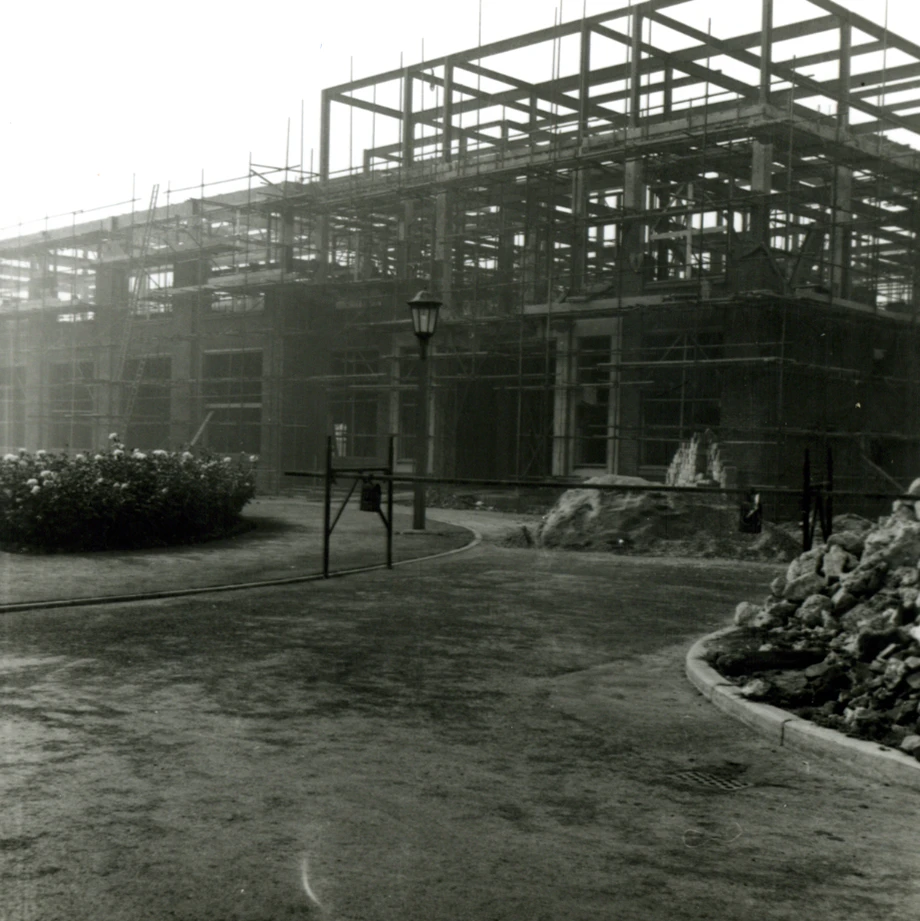
Larkin oversaw the construction of the Brynmor Jones Library, documenting the building process and practising his photography skills at the same time.
Larkin’s photograph of the library staff shows how much the University has changed in the intervening years.
Location
University of Hull
Cottingham Road
Hull
HU6 7RX
The sign can be found at the entrance to the Brymoor Jones Library.
Larkin's Cottingham
Larkin's Cottingham
The large village of Cottingham is home to thousands of new students each year, as it is the location for the University of Hull’s halls of residence. When he first arrived from Belfast in 1955, Larkin moved into one of these halls, Holtby House, once the home of Winifred Holtby’s family. He took an instant dislike to the large-scale accommodation and moved on to lodgings at 11 Outlands Road, where he stayed for just three months, finding the landlady’s radio prevented him from writing (although he did manage to complete ‘Mr Bleaney’, begun in Belfast).
Two more brief lodgings followed – at numbers 192a and 200 Hallgate – and, tired of all the ‘I’ll take it’ of viewing and taking rooms in the vicinity, he eventually left the village to settle into his ‘green-fringed eyrie’ in Hull’s Pearson Park.
Nevertheless, he returned to Cottingham regularly, mostly for its many places to eat and drink. He often enjoyed lunch at the West Bulls on Hull Road, or one of the famous sandwiches served at the Duke of Cumberland in the village centre. In later life he found the Memorial Club off South Street particularly congenial and could often be found there, talking with locals over a few evening pints.
The King George V Playing Fields on Northgate were Larkin’s inspiration for ‘Afternoons’, one of his most moving poems on the passage of time.
Philip Larkin died on 2 December 1985. His funeral was held a week later at St Mary’s Church in Hallgate, where he had always attended the University’s annual Carol Service. The large congregation, including Kingsley Amis, sang some of the hymns he liked: Abide with Me, Lead Kindly Light and The Day Thou gavest, Lord, is ended.
Larkin is buried in the Municipal Cemetery on Eppleworth Road. Close by are the graves of Monica Jones (1922-2001) and Maeve Brennan (1929-2003). His grave is on the left-hand side as you enter, in the sixth row in from the trees on the far side. His white headstone simply says: ‘Philip Larkin 1922-1985, Writer.’
Larkin often socialised in Cottingham, sometimes accompanied by his long term companion Monica Jones, seen here at the station.
Cottingham Memorial Club.
Location
Cottingham
HU16 5QG
The sign can be found on the front of The Duke of Cumberland pub facing up King Street.